

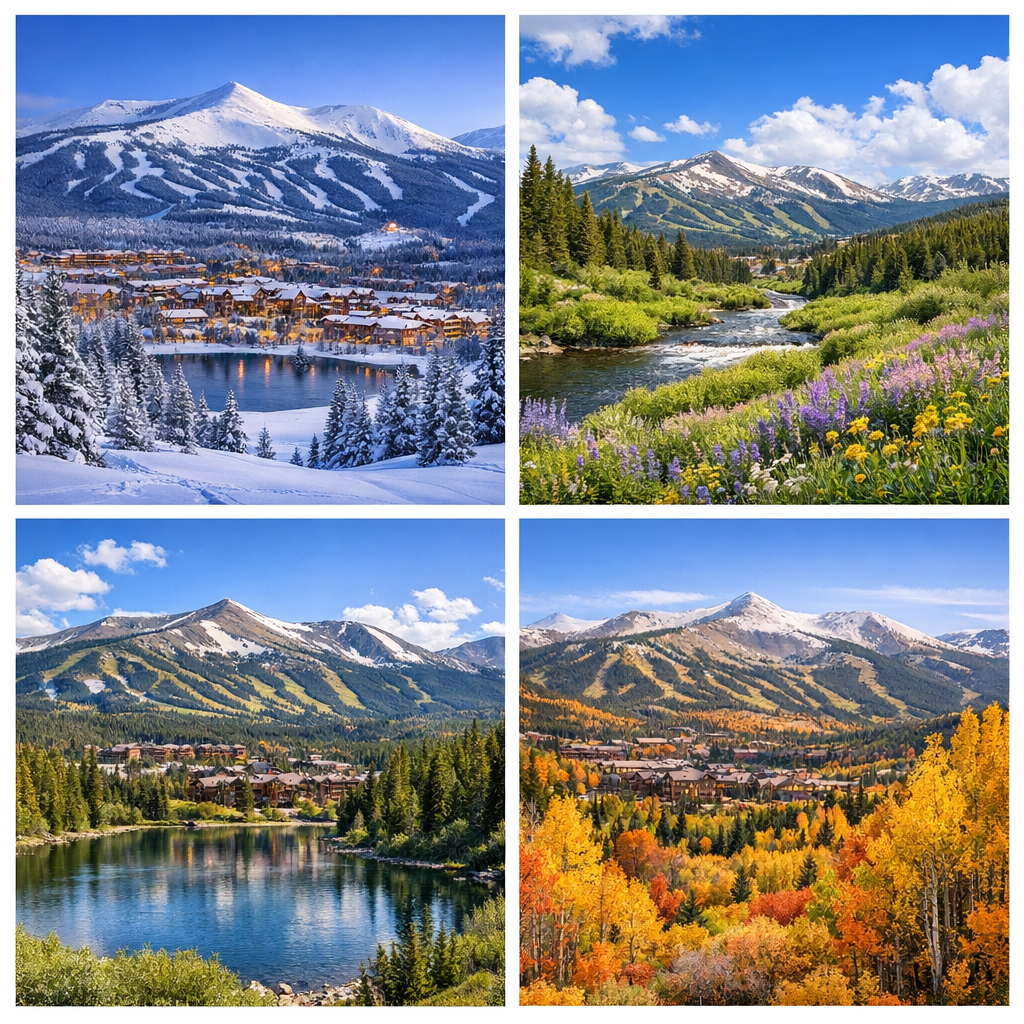
Breckenridge, Colorado, nestled at an elevation of 9,601 feet, offers a distinctive high-alpine climate characterized by significant seasonal variations. Understanding these patterns is essential for both residents and visitors to make the most of what each season has to offer.
Winter: November to April
Winter in Breckenridge is marked by substantial snowfall and cold temperatures. Average daytime highs hover around 28°F, with nighttime lows often dipping to 15°F. The town receives an average annual snowfall of approximately 366 inches, providing excellent conditions for winter sports enthusiasts. Despite the cold, Breckenridge enjoys abundant sunshine, contributing to the region’s reputation for ‘bluebird’ ski days. It’s advisable to dress in layers and use sun protection due to the intense high-altitude sun.
Spring: May
Spring is a transitional period with variable weather. While daytime temperatures can reach the upper 30s to low 50s, snowstorms are still possible, especially in early May. This season is known for its wet conditions, often bringing several inches of snow, making it ideal for spring skiing. Visitors should be prepared for rapid weather changes and pack accordingly.
Summer: June to August
Summers in Breckenridge are pleasantly warm and dry, with average daytime temperatures in the mid-70s and cooler evenings around 50°F. Afternoon thunderstorms are common, typically occurring around 3 PM, so it’s wise to plan outdoor activities accordingly. The low humidity and abundant sunshine make this season perfect for hiking, biking, and other outdoor pursuits. Sun protection and hydration are crucial due to the strong mountain sun and high altitude.
Fall: September to October
Fall brings crisp air and vibrant foliage as the aspen leaves turn golden. Temperatures range from the high 40s to mid-60s, creating comfortable conditions for outdoor activities. However, fall storms can produce strong winds and hail, and snow is not uncommon in late September or early October. Layered clothing is recommended to adapt to the fluctuating temperatures.
Breckenridge’s high-altitude environment means weather conditions can change rapidly. Regardless of the season, it’s essential to stay informed about the latest forecasts and be prepared for sudden shifts in weather. Embracing the unique climate of Breckenridge allows for a rich and varied experience throughout the year.