

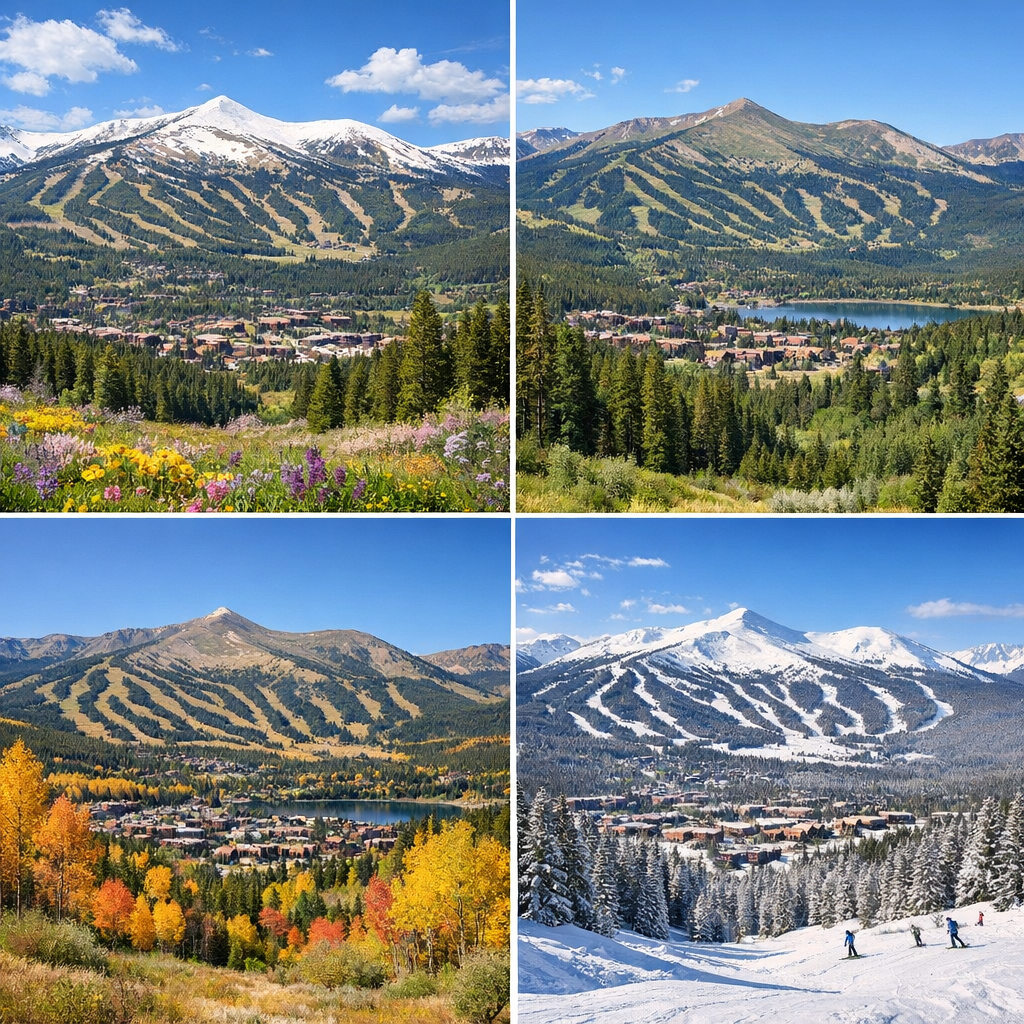
Breckenridge, Colorado, nestled in the Rocky Mountains at an elevation of 9,601 feet, offers a distinctive high-alpine climate that shapes the experiences of residents and visitors alike. Understanding the seasonal weather patterns is essential for making the most of what this mountain town has to offer.
Winter: Snowy and Sunny
From November through April, Breckenridge transforms into a winter wonderland. The town receives an average annual snowfall of 366 inches, providing excellent conditions for skiing and snowboarding. Despite the cold, with average daytime temperatures around 28°F and nighttime lows near 15°F, the area enjoys abundant sunshine, often referred to as ‘bluebird’ days. It’s important to dress in layers and use sun protection, as the high-altitude sun can be intense even in winter.
Spring: Snowy Transitions
Spring in Breckenridge, particularly March and April, is known for being the snowiest season. Average daytime temperatures range from the upper 30s to low 50s, and significant snowstorms can bring several inches to several feet of snow. This period offers some of the best spring skiing conditions in the Rockies.
Summer: Mild and Pleasant
Summers, from June to August, are characterized by warm days and cool nights. Average daytime temperatures hover around 70°F, while nighttime temperatures drop to about 50°F. The low humidity and abundant sunshine make it ideal for outdoor activities like hiking and biking. Afternoon thunderstorms are common, so it’s advisable to carry rain gear and plan activities accordingly.
Fall: Crisp and Colorful
Fall brings cooler temperatures and vibrant foliage, particularly the golden hues of aspen trees. Daytime temperatures range from the high 40s to mid-60s, with cooler evenings. Fall storms can produce wind and hail, and early snowfall is possible in late September or early October. It’s a picturesque time to enjoy the outdoors before the onset of winter.
Given Breckenridge’s high-altitude environment, weather conditions can change rapidly. It’s advisable to check local forecasts regularly and be prepared for sudden shifts in weather, regardless of the season. Dressing in layers and staying hydrated are key strategies for comfort and safety in this dynamic climate.